Sunday, November 29, 2009

Those parents

In our teacher lounge I overhear complaints about parents all of the time.

"I got into teaching to teach, not to raise people's kids for them."

"That would work great if we could just get the parents on board."

"I just wish we could get all of the parents to wake up and realize that if they keep doing what they're doing then their kid is going to turn out exactly like them."

"Wouldn't it be nice if we could pass a law making it illegal to breed if you don't pass a parenting test first?"

Honestly I tend to agree with most of these statements. My entire teaching career I've had an adversarial relationship with (most) of the parents I've dealt with.

That said, I have to stop and realize that most of the parents we complain about (the ones who don't show up for conferences, don't discipline, fight IEPs, and come to school wearing those stupid T-shirts from Wal-Mart that say things like "It's funny how you think I'm listening") were just about the right age to have gotten out of public school just before the recent accountability movements got underway. For all of our complaints I do think that in general we are doing better for our kids as a whole now than we did prior to NCLB. Heavy accountability, as much as it restricts us, also prevents teachers from ignoring the problem kids in their class and putting them in a corner until the year is out.

So we're trying to help kids whose parents were failed by the system. Naturally they will be skeptical about the system. The way to reach them will involve recognizing their point of view and trying to help them see ours. The problem is that after a long day of teaching it's hard to be open-minded with a jerk parent with worse manners then your students.

The Primary Years Programme that we have at Iduma promotes connections with the community as part of the curriculum but we always had a very hard time getting parents to show up to informational meetings or contribute when we had lessons about family backgrounds and culture.

I guess it will be a long road to getting the support of parents who were failed by their own schooling. But our approach must be at least 2-tiered: One, communicate openly and effectively with parents (keeping our own frustrations out of the equation as much as possible). Two, do our best not to fail our current students so that when they are parents they'll come to us with better memories and desire to be a part of what we do for their kids.

Sunday, November 22, 2009

Teacher/Gamer/Trailblazer


I got my new copy of THE Journal in my mailbox at school the other day and the cover story was about a group of educators that meet informally inside World of Warcraft (WOW) to network and learn together about everything from general teaching strategies ("Does anyone know a good lesson on reptiles?") to specific possibilities for using a game like WOW to engage and teach students.

The "Guild" is called Cognitive Dissonance. Here's an in-game shot of some of its members:


I have to admit, I love the idea. I played WOW once and quickly realized I'd better steer clear or risk getting sucked into playing it for hours every night. It sounds like the people in the article are still running that risk but nonetheless they are getting some interesting things done. It's a great opportunity for communicating with other professionals in a low-risk, informal setting (players range from teachers to principals and other administrators) and it also stimulates discourse on a topic that we've all become familiar with in the last semester: the need to incorporate technology and gaming into education.

Second Life has already been used in this way but bring it back to Pink and notice the key difference between Second Life and WOW. Play. There's just a lot more opportunity to have fun in a game than a non-game virtual world and that sense of play helps stimulate and relax members.

As a professional teacher I often notice possible lessons emerge when I play games. But since I'm always alone I tend to just forget about them. These people are all involved in a shared endeavor so when one of them thinks to themselves "Hey, there's a math lesson imbedded in the process of selecting weapons and armor for maximum effectiveness" they can talk about it right as they think it.

One member is the Instructional Technology Coordinator for a district in North Carolina and he's moving theory to practice by attempting to start an after-school program for at-risk students that uses WOW as a platform for teaching.

I know from experience that KISD's firewall is set up to block computers from accessing game servers so even if administrator will and funding were in place there are still a lot of barriers to such a program in my district. It inspires me to get closer to the decision-makers when it comes to technology in Killeen because there have been several instances in the last 2 years where our strict tech policies have stymied a good idea. There's that need for vertical/lateral networking.

Regardless, I'd join the WOW guild right now for the opportunity for discourse but I have neither the time nor the money to play it at this point. I'm hoping to get into Star Trek Online when it goes active in a year or so. Perhaps I will start my own educators' guild (they'll probably call them fleets) when I get going in that.

Sunday, November 15, 2009

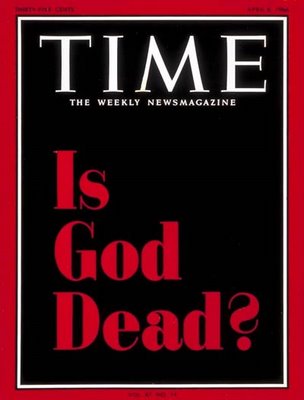
Faith and Leadership in the new century


"
Have you not heard of that madman who lit a lantern in the bright morning hours, ran to the market place, and cried incessantly: "I seek God! I seek God!"---As many of those who did not believe in God were standing around just then, he provoked much laughter. Has he got lost? asked one. Did he lose his way like a child? asked another. Or is he hiding? Is he afraid of us? Has he gone on a voyage? emigrated?---Thus they yelled and laughed.


The madman jumped into their midst and pierced them with his eyes. "Whither is God?" he cried; "I will tell you.
We have killed him---you and I. All of us are his murderers. But how did we do this? How could we drink up the sea? Who gave us the sponge to wipe away the entire horizon? What were we doing when we unchained this earth from its sun? Whither is it moving now? Whither are we moving? Away from all suns? Are we not plunging continually? Backward, sideward, forward, in all directions? Is there still any up or down? Are we not straying, as through an infinite nothing? Do we not feel the breath of empty space? Has it not become colder? Is not night continually closing in on us? Do we not need to light lanterns in the morning? Do we hear nothing as yet of the noise of the gravediggers who are burying God? Do we smell nothing as yet of the divine decomposition? Gods, too, decompose. God is dead. God remains dead. And we have killed him."

Nietzsche wrote that in 1882 in his work, The Gay Science. (He wasn't a homosexual. Gay Science was a common term at the time for the skill required to create poetry. Nowadays we call it verbal-linguistic intelligence. You almost have to appreciate gay science for its simplicity).

From what I've gathered, Nietzsche wasn't really talking about an assault on the Creator himself but rather about a growing movement towards relativistic thinking that was occurring in the world at the time. Basically, he was saying if everything becomes relative then there can be no absolutes. Since God is the ultimate absolute then relativism destroys Him.

More than a hundred years later I think that the inherent conflict between relativism and absolutism, earthly knowledge vs. divine knowledge is alive and well. God hasn't died by any means but the speed at which information travels starts to make it easier to doubt in Him. For example, it's all well and good for us to accept our little personal tragedies with words like "God has a plan" but at least for me that blade gets a bit dulled when you know there are millions of people out there starving to death. And any time some scientist does something wacky like growing eyes on the wings of a fly the news spreads pretty quick.

That said, hopelessness and faithlessness does a person little help in this crazy world of ours. I think as leaders in public education we have a challenging job.

First we are not able to transparently teach our faith, the best we can do is exemplify it to others.

Second, as teachers of knowledge we represent peddlers selling slices of the apple from Eden. I never met an atheist until I got to college and started bumping into incredibly learned and intelligent people. It's obviously not a 100% connection but it seems to me that the smarter a person gets the better reasons they find for doubting in God. Yet our mission is to educate. It's not a total paradox, but there's at least a subtle one.

Third, the more intelligent we make people, the more scientists there will be out there doing things that start to make God look like a joke. In the same way that the incredible world of Star Trek in the 60s is basically reality today, science is making the incredible world of the divine described by prophets and scribes in 2000 BC seem a human reality in many ways.

So what are we to do? For my part, I fall back to a personal motto of mine: Don't despair.

Beyond that I return once again to the importance of imbedded character education in the curriculum, for example the profiles and attitudes that the Primary Years Programme (I wonder if the IBO considered that the extra "me" at the end of "program" there would come off as pompous in the States) of which I am a fan. Just like we need to teach students to be discriminating consumers of information, they must also become discriminating users of such information. We must also continue to lead by example. It's doubtful that we'll ever be able to teach Christianity in public schools (and for my part I think that's an important thing) but all the same we can demonstrate how Christians behave and hope that some of it rubs off.


Sunday, November 8, 2009

Apoca-mock-alypse

I don't know if any of you have heard but all of our work is pointless because the world will end in cataclysm in only about 3 years. I've had a LOT of kids ask me this year "Mr. Hartley, is the world going to end in 2012?"

First, my casual take on the movie that is largely responsible for prom
pting this notion (if you want the educational perspective you can skip to below the pictures):

Let's take a look back over the course of movie disasters.

1996: Independence Day
To be fair, I loved this movie. It and Twister both came out summer '96 and they were awesome. "ID4" was I think the last blockbuster that relied heavily on studio models rather than computer generated models. That's an actual model of the White House we're seeing blow up right there. They built it to 1/10 scale or something like that. The detail is excellent and it shows. I'd put that explosion above any CG destruction you see these days.

Anyway, we got to see a lot of people killed by these scary alien space ships. All attempts to return fire are blocked by their shields (which handily absorb even our best nukes). By day 3 of the invasion (conveniently July 4th) it looks like humanity is done for.

THEN Jeff Goldblum, Will Smith, and kick-ass, fighter-pilot president Bill Pulman use missiles, nukes, and a computer virus to bring them all crashing down in about an hour or so. HA! Take that aliens. Don't mess with humans. Curtain rises, all cheer, and the studio made millions.

By the end of the movie you can assume most major metropolitan centers have been destroyed but after the surprise attack (which would have taken out 20 cities around the world at most) it's reasonable to assume that the cities were largely deserted as citizens fled.
Peter's Estimated Movie Death Toll: 100 Million people.

2004: The Day After Tomorrow

This one was instantly scarier and less fun to watch. The reason for this is that our destructor is Mother Nature and we brought on our demise with global warming. The premise right away seems a LOT more plausible than an alien invasion. An what's worse? You can't nuke a tidal wave or a tornado. (Not yet! HA!)

So anyway by the end of the film the giant storm that brings the awef
ul weather just conveniently stops. The governments of the world enter a new age of peaceful relations in the face of the need to accommodate a now-frozen Northern Hemisphere (if you're American and you survived you ended up living in Mexico). Intrepid families are reunited, people fall in love. It's ridiculous.
Peter's Estimated Movie Death Toll: 1-2 Billion (pretty much anyone caught above the Latitudes of Dallas froze to death).

Today: 2012

See that? That's Los Angeles SLIPPING INTO THE OCEAN! Not a tidal wave this time. Indeed, the ocean is just sitting there going "Don't look at me, I'm not moving. It's you're stupid land that won't hold still like it's supposed to." You can watch a clip of the scene that pre-empts this poster here. It's pretty scary stuff. It makes that tidal wave that swallowed New York in the poster for the Day After Tomorrow above look silly by comparison. I mean, in the Day After Tomorrow teenage heartthrob Jake Gyllenhaal survived that wave by just hiding in a New York library. Try that trick in 2012 and you quickly find the library and everything for miles around it under water.


And speaking of tidal waves, look at this bad boy to the left. Yeah, you're seeing it right. That's The Tidal Wave the Crests the Himalayas. Forget looking for high ground guys. There's no ground high enough. Sorry.

Anyway I haven't seen this one yet and I don't intend to but from what I can gather from the trailers the plot centers around a few plucky (and extremely lucky. If you watched that clip count how many near-death close calls they had in just 5 minutes) folks who try to work their way to some sort of modern day Arks that government has been building and survive floating on the water for...I don't know, the rest of their lives? 40 Days and 40 Nights? Who knows.
Peter's Estimated Movie Death Toll: EVERYBODY minus maybe about 10,000

These films are all being made by the same director. I guess he's either not planning ahead or he's planning to retire after 2012 because one glance at the trailer shows he's basically pulled out every stop in terms of disaster movies. The only thing worse would be a space station that simply destroys planets but of course that's been done.

WHAT'S THE POINT HARTLEY?

Well, beyond having a little chuckle at the shear ridiculousness of The Tidal Wave That Crests the Himalayas after I first saw it in a teaser preview a year or so ago, I hadn't thought much about this whole 2012 thing until this school year when, as I said, kids started asking me with surprising frequency "Is the world going to end."

I didn't think much of it. I just always told them, "No, that's just a movie. There are a few people who think it will but they really have no way of knowing." And much to my satisfaction that seemed to take care of it. The child would smile re-assuredly and head back to class.

Then of course we had our excitement in Killeen on Thursday and everyone was in an apocalyptic mood on Friday. That's perhaps an overstatement but all of the kids were talking about it and all of the teachers were doing their best to keep their cool and let everyone talk/write, do what they needed to do. I was very pleased with our staff and their resilience. I got off lucky not having a class of my own to deal with.

And then later that day I was at lunch when one of our P.E. teachers told me SHE was worried about 2012. I usually make it a rule not to laugh AT people but I had a tough time keeping a grin off my face. "But it's scientific! Haven't you seen the shows on the History Channel?" she said. I promised to find her some good websites debunking the 2012 thing. Which I did. And in the course of doing so I had a few realizations regarding today's learners:

Number 1: We normally condemn using Wikipedia as a source for research at all but it some cases it is an excellent spring board. Naturally you have to be skeptical of that you read since anyone can write things for Wikipedia but the article about 2012 was rife with in-text citations and sources, most all of which are very reputable like articles from scientific journals. A frequent policy is to very simply say "No Wikipedia" but as long as we teach students to be good consumers of information there's no reason for such blanket statements. Bottom line: a lot of article on Wikipedia have fantastic peer-review, with many more critical eyes checking the sources than are available on the review boards for the journals we find out sources in. That said, you're still better off going to the original source they cite for the info. The convenience of Wikipedia is that the searching for that outside source has already been done for you.

Number 2: There are apparently a LOT of kids out there who are scared out of their wits by all of this 2012 mess. I also found this site while trying to debunk 2012 and was stunned to learn about kids who wanted to kill themselves rather than drown in The Tidal Wave That Crests the Himalayas. The marketing for that 2012 movie prompts people to "Go online and find the truth". Now, clever internet marketing is a common thing for movies these days. Films and video games undergoing massive promotion will often hide funny little clues like GPS coordinates of movie locations, establish phony websites with fake news articles, and things like that. For my part I tend to think of that as clever marketing and using all the tools they have available. Indeed, I would call it Daniel Pink's Symphony at its best: Don't just put out commercials, put out all kinds of info in all media venues.

I 2012's case, this clever marketing involves finding links to a website that is offering entry into a lottery in which winners will get a seat on one of those government arks. It also provides all of the possible reasons people use for why 2012 will kill us all. By the way, if you didn't know already: The Mayans predicted it (they didn't), Earth will align with the galactic plane and the gravity flux will throw us out of orbit (both statements are false), solar flares will fry us (again, nope), OR a rogue planet called Nibiri will collide with us (we'd see it in the sky already if that was going to happen).

However, permissiveness for clever marketing aside, I agree with the people writing about 2012's campaign on both of the debunking websites I linked above: it's going a little too far when you're trying to make a dollar by seriously convincing kids that their whole world is doomed in a very short time. It's hard to draw the line in the sand between doing it with the 2012 phenomenon or marketing a movie about the coming Zombie apocalypse (where will YOU be when the zombies arise?) but I think that the degree to which alternative sources like the History Channel, many other websites, and books are also backing up the movie's destructive claims lends the whole thing some extra credibility that gives it teeth.

At any rate, it comes down to the same thing with Wikipedia: Kids really need to be taught to recognize trustworthy information and non-trustworthy information. A few years back it was enough to say "Look at how crummy this website looks. You can tell an amateur made this. Do you really trust what they say?" Nowadays we have high-dollar companies like movie studios and television stations paying big bucks to make their false websites look credible. The need to check sources and be a critical thinker is increasing quickly.

I'm tempted to say it's irresponsible of movie studios to scare kids (and P.E. teachers) like that but at the end of the day I think it's more irresponsible for us as educators to fail to give students to tools they need to see through the lies out there. Of course all of the old problems crop up: how can I take time out to teach how to tell a good/bad website when I have to get ready for TAKS? It's a rich tapestry but somehow we have to figure it out.

Sunday, November 1, 2009

Disparity among students

The spring before I was hired by Killeen ISD I was completing a course at Baylor in Psychometrics taught by a goofy dude from somewhere up North. Near the end of the course he had us read an article (that I tried very hard to find but was unable to locate) in which the author argued against the idea of No Child Left Behind since the logic of the Bell Curve (and statistics in general) dictated that if any measurement of intelligence or ability was to be meaningful there would have to be a large portion of the population that fell behind it. So it was futile to act like we could get every kid beyond a meaningful yardstick of intelligence.

The same article also referenced findings that in spite of attempts to do so, there hasn't been any success in really increasing someone's IQ.

I don't remember what the point of the article was or why we were asked to read it but at the time I was just wrapping up the worst year of my life as a first year teacher in Belton. I was pretty disillusioned with the whole education process at the time and I basically took away this conclusion:
IF we cannot change people's IQs then there is little we can do for struggling students.

A few months later I was going through new teacher orientation in Killeen where I was told that one of Killeen ISD's beliefs is "Students can learn more and at higher levels". Secretly I remembered the article I'd read and thought it was probably silly to think that. But I also figured I had one year left at most before I was drummed out of education.

Fortunately a lot of things have changed since then.

I was in the teacher's lounge the other day at my school and overheard a teacher saying something similar to what that article's author had said in regards to NCLB and the futility of making them all geniuses. I remembered the article and chimed in with the Bell Curve logic of how some people just have to be at the -3 to -1 SD side of the curve.

But then I also said something that has become really clear to me in the years since I took that class at Baylor: "But they can do better then they are doing now, and that's what we need to try to do for them." We all agreed.

While looking for this article to remind myself exactly what it said, I found this article, which tried to correlate IQ tests to other life outcomes. Turns out it is not completely predictive but higher IQ does seem to point to higher levels of success (more so in academic endeavors but somewhat in non-academic endeavors too). It also links a lot of different variables in life to life's outcomes.

When it comes down to it, IQ is just one piece of the puzzle. Today kids come from backgrounds with divergent family structures, incomes, exposure to knowledge, and beliefs. Even if we can't change IQ drastically we can do a lot to try and help instill the values like empathy, commitment, curiosity, open-mindedness, etc. (wink to the PYP-experienced among us). We can also do a lot to show them the positive effects of loving and caring relationships even if those are rare at home.

It's easy to lump things like that into the category of "Character Development" and block out some time each week for things like that with our counselors but it's really a lot more interconnected with the general curriculum. As leaders we have an imperative to help teachers and students see the importance of including elements of "Character Development" into every lesson so that even if some of our students will never be president or a scientists they will all have some hope of becoming caring productive members of society with some feelings of self-efficacy.