Sunday, November 29, 2009

Those parents

In our teacher lounge I overhear complaints about parents all of the time.

"I got into teaching to teach, not to raise people's kids for them."

"That would work great if we could just get the parents on board."

"I just wish we could get all of the parents to wake up and realize that if they keep doing what they're doing then their kid is going to turn out exactly like them."

"Wouldn't it be nice if we could pass a law making it illegal to breed if you don't pass a parenting test first?"

Honestly I tend to agree with most of these statements. My entire teaching career I've had an adversarial relationship with (most) of the parents I've dealt with.

That said, I have to stop and realize that most of the parents we complain about (the ones who don't show up for conferences, don't discipline, fight IEPs, and come to school wearing those stupid T-shirts from Wal-Mart that say things like "It's funny how you think I'm listening") were just about the right age to have gotten out of public school just before the recent accountability movements got underway. For all of our complaints I do think that in general we are doing better for our kids as a whole now than we did prior to NCLB. Heavy accountability, as much as it restricts us, also prevents teachers from ignoring the problem kids in their class and putting them in a corner until the year is out.

So we're trying to help kids whose parents were failed by the system. Naturally they will be skeptical about the system. The way to reach them will involve recognizing their point of view and trying to help them see ours. The problem is that after a long day of teaching it's hard to be open-minded with a jerk parent with worse manners then your students.

The Primary Years Programme that we have at Iduma promotes connections with the community as part of the curriculum but we always had a very hard time getting parents to show up to informational meetings or contribute when we had lessons about family backgrounds and culture.

I guess it will be a long road to getting the support of parents who were failed by their own schooling. But our approach must be at least 2-tiered: One, communicate openly and effectively with parents (keeping our own frustrations out of the equation as much as possible). Two, do our best not to fail our current students so that when they are parents they'll come to us with better memories and desire to be a part of what we do for their kids.

Sunday, November 22, 2009

Teacher/Gamer/Trailblazer


I got my new copy of THE Journal in my mailbox at school the other day and the cover story was about a group of educators that meet informally inside World of Warcraft (WOW) to network and learn together about everything from general teaching strategies ("Does anyone know a good lesson on reptiles?") to specific possibilities for using a game like WOW to engage and teach students.

The "Guild" is called Cognitive Dissonance. Here's an in-game shot of some of its members:


I have to admit, I love the idea. I played WOW once and quickly realized I'd better steer clear or risk getting sucked into playing it for hours every night. It sounds like the people in the article are still running that risk but nonetheless they are getting some interesting things done. It's a great opportunity for communicating with other professionals in a low-risk, informal setting (players range from teachers to principals and other administrators) and it also stimulates discourse on a topic that we've all become familiar with in the last semester: the need to incorporate technology and gaming into education.

Second Life has already been used in this way but bring it back to Pink and notice the key difference between Second Life and WOW. Play. There's just a lot more opportunity to have fun in a game than a non-game virtual world and that sense of play helps stimulate and relax members.

As a professional teacher I often notice possible lessons emerge when I play games. But since I'm always alone I tend to just forget about them. These people are all involved in a shared endeavor so when one of them thinks to themselves "Hey, there's a math lesson imbedded in the process of selecting weapons and armor for maximum effectiveness" they can talk about it right as they think it.

One member is the Instructional Technology Coordinator for a district in North Carolina and he's moving theory to practice by attempting to start an after-school program for at-risk students that uses WOW as a platform for teaching.

I know from experience that KISD's firewall is set up to block computers from accessing game servers so even if administrator will and funding were in place there are still a lot of barriers to such a program in my district. It inspires me to get closer to the decision-makers when it comes to technology in Killeen because there have been several instances in the last 2 years where our strict tech policies have stymied a good idea. There's that need for vertical/lateral networking.

Regardless, I'd join the WOW guild right now for the opportunity for discourse but I have neither the time nor the money to play it at this point. I'm hoping to get into Star Trek Online when it goes active in a year or so. Perhaps I will start my own educators' guild (they'll probably call them fleets) when I get going in that.

Sunday, November 15, 2009

Faith and Leadership in the new century


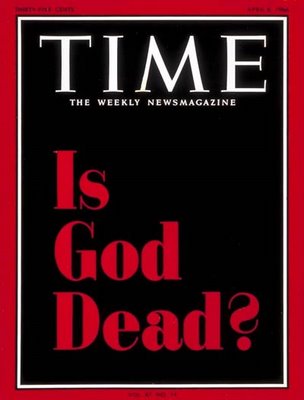
"
Have you not heard of that madman who lit a lantern in the bright morning hours, ran to the market place, and cried incessantly: "I seek God! I seek God!"---As many of those who did not believe in God were standing around just then, he provoked much laughter. Has he got lost? asked one. Did he lose his way like a child? asked another. Or is he hiding? Is he afraid of us? Has he gone on a voyage? emigrated?---Thus they yelled and laughed.


The madman jumped into their midst and pierced them with his eyes. "Whither is God?" he cried; "I will tell you.
We have killed him---you and I. All of us are his murderers. But how did we do this? How could we drink up the sea? Who gave us the sponge to wipe away the entire horizon? What were we doing when we unchained this earth from its sun? Whither is it moving now? Whither are we moving? Away from all suns? Are we not plunging continually? Backward, sideward, forward, in all directions? Is there still any up or down? Are we not straying, as through an infinite nothing? Do we not feel the breath of empty space? Has it not become colder? Is not night continually closing in on us? Do we not need to light lanterns in the morning? Do we hear nothing as yet of the noise of the gravediggers who are burying God? Do we smell nothing as yet of the divine decomposition? Gods, too, decompose. God is dead. God remains dead. And we have killed him."

Nietzsche wrote that in 1882 in his work, The Gay Science. (He wasn't a homosexual. Gay Science was a common term at the time for the skill required to create poetry. Nowadays we call it verbal-linguistic intelligence. You almost have to appreciate gay science for its simplicity).

From what I've gathered, Nietzsche wasn't really talking about an assault on the Creator himself but rather about a growing movement towards relativistic thinking that was occurring in the world at the time. Basically, he was saying if everything becomes relative then there can be no absolutes. Since God is the ultimate absolute then relativism destroys Him.

More than a hundred years later I think that the inherent conflict between relativism and absolutism, earthly knowledge vs. divine knowledge is alive and well. God hasn't died by any means but the speed at which information travels starts to make it easier to doubt in Him. For example, it's all well and good for us to accept our little personal tragedies with words like "God has a plan" but at least for me that blade gets a bit dulled when you know there are millions of people out there starving to death. And any time some scientist does something wacky like growing eyes on the wings of a fly the news spreads pretty quick.

That said, hopelessness and faithlessness does a person little help in this crazy world of ours. I think as leaders in public education we have a challenging job.

First we are not able to transparently teach our faith, the best we can do is exemplify it to others.

Second, as teachers of knowledge we represent peddlers selling slices of the apple from Eden. I never met an atheist until I got to college and started bumping into incredibly learned and intelligent people. It's obviously not a 100% connection but it seems to me that the smarter a person gets the better reasons they find for doubting in God. Yet our mission is to educate. It's not a total paradox, but there's at least a subtle one.

Third, the more intelligent we make people, the more scientists there will be out there doing things that start to make God look like a joke. In the same way that the incredible world of Star Trek in the 60s is basically reality today, science is making the incredible world of the divine described by prophets and scribes in 2000 BC seem a human reality in many ways.

So what are we to do? For my part, I fall back to a personal motto of mine: Don't despair.

Beyond that I return once again to the importance of imbedded character education in the curriculum, for example the profiles and attitudes that the Primary Years Programme (I wonder if the IBO considered that the extra "me" at the end of "program" there would come off as pompous in the States) of which I am a fan. Just like we need to teach students to be discriminating consumers of information, they must also become discriminating users of such information. We must also continue to lead by example. It's doubtful that we'll ever be able to teach Christianity in public schools (and for my part I think that's an important thing) but all the same we can demonstrate how Christians behave and hope that some of it rubs off.


Sunday, November 8, 2009

Apoca-mock-alypse

I don't know if any of you have heard but all of our work is pointless because the world will end in cataclysm in only about 3 years. I've had a LOT of kids ask me this year "Mr. Hartley, is the world going to end in 2012?"

First, my casual take on the movie that is largely responsible for prom
pting this notion (if you want the educational perspective you can skip to below the pictures):

Let's take a look back over the course of movie disasters.

1996: Independence Day
To be fair, I loved this movie. It and Twister both came out summer '96 and they were awesome. "ID4" was I think the last blockbuster that relied heavily on studio models rather than computer generated models. That's an actual model of the White House we're seeing blow up right there. They built it to 1/10 scale or something like that. The detail is excellent and it shows. I'd put that explosion above any CG destruction you see these days.

Anyway, we got to see a lot of people killed by these scary alien space ships. All attempts to return fire are blocked by their shields (which handily absorb even our best nukes). By day 3 of the invasion (conveniently July 4th) it looks like humanity is done for.

THEN Jeff Goldblum, Will Smith, and kick-ass, fighter-pilot president Bill Pulman use missiles, nukes, and a computer virus to bring them all crashing down in about an hour or so. HA! Take that aliens. Don't mess with humans. Curtain rises, all cheer, and the studio made millions.

By the end of the movie you can assume most major metropolitan centers have been destroyed but after the surprise attack (which would have taken out 20 cities around the world at most) it's reasonable to assume that the cities were largely deserted as citizens fled.
Peter's Estimated Movie Death Toll: 100 Million people.

2004: The Day After Tomorrow

This one was instantly scarier and less fun to watch. The reason for this is that our destructor is Mother Nature and we brought on our demise with global warming. The premise right away seems a LOT more plausible than an alien invasion. An what's worse? You can't nuke a tidal wave or a tornado. (Not yet! HA!)

So anyway by the end of the film the giant storm that brings the awef
ul weather just conveniently stops. The governments of the world enter a new age of peaceful relations in the face of the need to accommodate a now-frozen Northern Hemisphere (if you're American and you survived you ended up living in Mexico). Intrepid families are reunited, people fall in love. It's ridiculous.
Peter's Estimated Movie Death Toll: 1-2 Billion (pretty much anyone caught above the Latitudes of Dallas froze to death).

Today: 2012

See that? That's Los Angeles SLIPPING INTO THE OCEAN! Not a tidal wave this time. Indeed, the ocean is just sitting there going "Don't look at me, I'm not moving. It's you're stupid land that won't hold still like it's supposed to." You can watch a clip of the scene that pre-empts this poster here. It's pretty scary stuff. It makes that tidal wave that swallowed New York in the poster for the Day After Tomorrow above look silly by comparison. I mean, in the Day After Tomorrow teenage heartthrob Jake Gyllenhaal survived that wave by just hiding in a New York library. Try that trick in 2012 and you quickly find the library and everything for miles around it under water.


And speaking of tidal waves, look at this bad boy to the left. Yeah, you're seeing it right. That's The Tidal Wave the Crests the Himalayas. Forget looking for high ground guys. There's no ground high enough. Sorry.

Anyway I haven't seen this one yet and I don't intend to but from what I can gather from the trailers the plot centers around a few plucky (and extremely lucky. If you watched that clip count how many near-death close calls they had in just 5 minutes) folks who try to work their way to some sort of modern day Arks that government has been building and survive floating on the water for...I don't know, the rest of their lives? 40 Days and 40 Nights? Who knows.
Peter's Estimated Movie Death Toll: EVERYBODY minus maybe about 10,000

These films are all being made by the same director. I guess he's either not planning ahead or he's planning to retire after 2012 because one glance at the trailer shows he's basically pulled out every stop in terms of disaster movies. The only thing worse would be a space station that simply destroys planets but of course that's been done.

WHAT'S THE POINT HARTLEY?

Well, beyond having a little chuckle at the shear ridiculousness of The Tidal Wave That Crests the Himalayas after I first saw it in a teaser preview a year or so ago, I hadn't thought much about this whole 2012 thing until this school year when, as I said, kids started asking me with surprising frequency "Is the world going to end."

I didn't think much of it. I just always told them, "No, that's just a movie. There are a few people who think it will but they really have no way of knowing." And much to my satisfaction that seemed to take care of it. The child would smile re-assuredly and head back to class.

Then of course we had our excitement in Killeen on Thursday and everyone was in an apocalyptic mood on Friday. That's perhaps an overstatement but all of the kids were talking about it and all of the teachers were doing their best to keep their cool and let everyone talk/write, do what they needed to do. I was very pleased with our staff and their resilience. I got off lucky not having a class of my own to deal with.

And then later that day I was at lunch when one of our P.E. teachers told me SHE was worried about 2012. I usually make it a rule not to laugh AT people but I had a tough time keeping a grin off my face. "But it's scientific! Haven't you seen the shows on the History Channel?" she said. I promised to find her some good websites debunking the 2012 thing. Which I did. And in the course of doing so I had a few realizations regarding today's learners:

Number 1: We normally condemn using Wikipedia as a source for research at all but it some cases it is an excellent spring board. Naturally you have to be skeptical of that you read since anyone can write things for Wikipedia but the article about 2012 was rife with in-text citations and sources, most all of which are very reputable like articles from scientific journals. A frequent policy is to very simply say "No Wikipedia" but as long as we teach students to be good consumers of information there's no reason for such blanket statements. Bottom line: a lot of article on Wikipedia have fantastic peer-review, with many more critical eyes checking the sources than are available on the review boards for the journals we find out sources in. That said, you're still better off going to the original source they cite for the info. The convenience of Wikipedia is that the searching for that outside source has already been done for you.

Number 2: There are apparently a LOT of kids out there who are scared out of their wits by all of this 2012 mess. I also found this site while trying to debunk 2012 and was stunned to learn about kids who wanted to kill themselves rather than drown in The Tidal Wave That Crests the Himalayas. The marketing for that 2012 movie prompts people to "Go online and find the truth". Now, clever internet marketing is a common thing for movies these days. Films and video games undergoing massive promotion will often hide funny little clues like GPS coordinates of movie locations, establish phony websites with fake news articles, and things like that. For my part I tend to think of that as clever marketing and using all the tools they have available. Indeed, I would call it Daniel Pink's Symphony at its best: Don't just put out commercials, put out all kinds of info in all media venues.

I 2012's case, this clever marketing involves finding links to a website that is offering entry into a lottery in which winners will get a seat on one of those government arks. It also provides all of the possible reasons people use for why 2012 will kill us all. By the way, if you didn't know already: The Mayans predicted it (they didn't), Earth will align with the galactic plane and the gravity flux will throw us out of orbit (both statements are false), solar flares will fry us (again, nope), OR a rogue planet called Nibiri will collide with us (we'd see it in the sky already if that was going to happen).

However, permissiveness for clever marketing aside, I agree with the people writing about 2012's campaign on both of the debunking websites I linked above: it's going a little too far when you're trying to make a dollar by seriously convincing kids that their whole world is doomed in a very short time. It's hard to draw the line in the sand between doing it with the 2012 phenomenon or marketing a movie about the coming Zombie apocalypse (where will YOU be when the zombies arise?) but I think that the degree to which alternative sources like the History Channel, many other websites, and books are also backing up the movie's destructive claims lends the whole thing some extra credibility that gives it teeth.

At any rate, it comes down to the same thing with Wikipedia: Kids really need to be taught to recognize trustworthy information and non-trustworthy information. A few years back it was enough to say "Look at how crummy this website looks. You can tell an amateur made this. Do you really trust what they say?" Nowadays we have high-dollar companies like movie studios and television stations paying big bucks to make their false websites look credible. The need to check sources and be a critical thinker is increasing quickly.

I'm tempted to say it's irresponsible of movie studios to scare kids (and P.E. teachers) like that but at the end of the day I think it's more irresponsible for us as educators to fail to give students to tools they need to see through the lies out there. Of course all of the old problems crop up: how can I take time out to teach how to tell a good/bad website when I have to get ready for TAKS? It's a rich tapestry but somehow we have to figure it out.

Sunday, November 1, 2009

Disparity among students

The spring before I was hired by Killeen ISD I was completing a course at Baylor in Psychometrics taught by a goofy dude from somewhere up North. Near the end of the course he had us read an article (that I tried very hard to find but was unable to locate) in which the author argued against the idea of No Child Left Behind since the logic of the Bell Curve (and statistics in general) dictated that if any measurement of intelligence or ability was to be meaningful there would have to be a large portion of the population that fell behind it. So it was futile to act like we could get every kid beyond a meaningful yardstick of intelligence.

The same article also referenced findings that in spite of attempts to do so, there hasn't been any success in really increasing someone's IQ.

I don't remember what the point of the article was or why we were asked to read it but at the time I was just wrapping up the worst year of my life as a first year teacher in Belton. I was pretty disillusioned with the whole education process at the time and I basically took away this conclusion:
IF we cannot change people's IQs then there is little we can do for struggling students.

A few months later I was going through new teacher orientation in Killeen where I was told that one of Killeen ISD's beliefs is "Students can learn more and at higher levels". Secretly I remembered the article I'd read and thought it was probably silly to think that. But I also figured I had one year left at most before I was drummed out of education.

Fortunately a lot of things have changed since then.

I was in the teacher's lounge the other day at my school and overheard a teacher saying something similar to what that article's author had said in regards to NCLB and the futility of making them all geniuses. I remembered the article and chimed in with the Bell Curve logic of how some people just have to be at the -3 to -1 SD side of the curve.

But then I also said something that has become really clear to me in the years since I took that class at Baylor: "But they can do better then they are doing now, and that's what we need to try to do for them." We all agreed.

While looking for this article to remind myself exactly what it said, I found this article, which tried to correlate IQ tests to other life outcomes. Turns out it is not completely predictive but higher IQ does seem to point to higher levels of success (more so in academic endeavors but somewhat in non-academic endeavors too). It also links a lot of different variables in life to life's outcomes.

When it comes down to it, IQ is just one piece of the puzzle. Today kids come from backgrounds with divergent family structures, incomes, exposure to knowledge, and beliefs. Even if we can't change IQ drastically we can do a lot to try and help instill the values like empathy, commitment, curiosity, open-mindedness, etc. (wink to the PYP-experienced among us). We can also do a lot to show them the positive effects of loving and caring relationships even if those are rare at home.

It's easy to lump things like that into the category of "Character Development" and block out some time each week for things like that with our counselors but it's really a lot more interconnected with the general curriculum. As leaders we have an imperative to help teachers and students see the importance of including elements of "Character Development" into every lesson so that even if some of our students will never be president or a scientists they will all have some hope of becoming caring productive members of society with some feelings of self-efficacy.

Sunday, October 25, 2009

The Once and Future Kid


In The Once and Future King, T.H. White tells the story of King Arthur, beginning in his childhood and spanning the prosperous years of Camelot to its eventual downfall. Unless you were required to read it in high school (as I was), you probably haven't read it (I wouldn't have) but it's a pretty good book. Many of you may in fact be very familiar with the first of its four sections: The Sword in the Stone (inspiration for one of the best Disney movies ever. Assuming we exclude anything by Pixar I would readily put it in their top 15).

In the Sword in the Stone section of the book, Merlin the mysterious wizard is brought to the castle where Arthur lives to give him an education. The master of the castle expects the experience to be very much like what parents today expect: Lots of sitting and listening. Silent reading. Plenty of written work. Familiar tenets of the passive, "sit and receive" theory of education.

What Arthur actually got was a radically constructivist approach to a leadership curriculum (Merlin knew where Arthur was headed in life) in which he was transformed into a variety of animals and sent to interact with other animals of that species. In the book (not the movie) he spoke with ants and saw that they were a mindless hive with no opportunity for individuality, spent the night with falcons and learned the perils of a system based too strongly on rank and social hierarchy, and swam with swans and realized that not every species must be territorial.

Arthur got all of this through experiential learning. Merlin didn't tell him what kinds of things to say or ask when he was among the animals (though he occasionally gave a tip on how not to be recognized as an outsider). Merlin even learned a lot from Arthur when "Wart" as he was called then returned and the two discussed what had been done, seen, and said.

By the by: An absolutely fantastic plot element of the book was that Merlin experienced time in reverse, so at this point in Arthur's life he had already seen everything that would happen to Camelot. It helped explained why he was a great teacher at the end of his life (the beginning of the story) but wasn't more help in stopping Camelot's downfall: at that point at the end of it all he was a largely inexperienced young man.

If I were you I would be thinking "Thanks for the Literature lesson, professor. What's he getting at?"

The Sword in the Stone section of The Once and Future King was released in the 1930s. I think it's pretty remarkable that the divide between experiential, constructivist learning and sit-listen-read learning was noted so far back that it was only a few years after the adoption of the factory system of education.

Obviously the divide still exists today and I'm going to connect it now briefly to (surprise, surprise) technology. Last week I wrote about Multi-User Virtual Environments (MUVEs) and their potential to become places of learning. As the 21st century progresses, digital video technology will become more and more robust. TVs can already display things at resolutions that are staggering. It's only a matter of time before we abandon flat screens for more immersive, 3D display options. Combine that with motion-sensing technology already prevalent on the Nintendo Wii and it seems more and more clear to me that within 20 years people are going to be spending a lot of time not just engaged in virtual environments (like they are now in World of Warcraft and other games) but experiencing these environments in a first-person sense that truly makes the user feel like they are there.

When this happens people are going to start disappearing. Whether you're into single-player adventure style games where you explore huge worlds to win quests, or you're into large multi-player shoot-em-up death matches, or you'd rather play sports games where you get to be the star quarterback in what really feels like Texas Stadium, kids will start dropping off the map. Reality will pale in comparison.
I think its likely that companies will even work out price plans that will allow people to remain inside games for long periods and still pay without necessarily having much of an income. I don't know HOW they'll do that but I think they WILL do it. This way when people are reluctant to emerge and go to their job, they'll be able to stay in the game. Maybe indefinitely. If automation hasn't reached the point where robots can take over for that loss of workers, I don't need to tell you what it will do to the economy (if it has, well, maybe we'd be better off inside the game anyway).

But assuming the machines can't do everything for us at that point (Let's call it the social science version of accounting's Going Concern Principle), education has got to keep up so we can handle that kind of competition. Right now we've got House Bill 4294, which will allow districts to purchase digital textbooks. I was excited about that in Austin but the more I think about it the more I cringe. I know when the list of approved purchases comes out in a year it will mostly involve computerized copies of textbooks by the big publishers. It will be taking the same stuff we've always taught, in the same way we've always taught it, and putting it on a computer screen. That's not going to do anything for today's learners (certainly not tomorrow's).

We've also got major software developers saying "There's no market for educational software." That's what I heard from a friend of Craig Hammonds' who worked for Microsoft two years ago when I asked him if they had anything in the works. No wonder, when schools can't buy non-textbook stuff. So Microsoft will keep making more Halo games instead of using some of that development muscle to revolutionize educational software. (I pray that what he told me was old information but I frankly don't hold out much hope.)

What's all this go to do with King Arthur?

Good question

Our current plans to adopt technology into education do not really seek to change the old ways we've done things, but simply to digitize them. We've got Merlin the wizard at the castle but we're asking him to make our kids read a book about fractions or Ancient Rome when we could ask him to take them there, to really help them experience these things.

As virtual reality worlds become, well, a reality, I see a strong potential to create character-developing, thinking-skill-developing learning experiences not unlike those Merlin offered to Arthur. Imagine what a kid could learn by actually spending some time with animals, or people from Kenya, or maybe hanging out with guys like that fat guy in the chair above to help them realize the value of things like knowledge, nature, and real human interaction.

As the 21st century moves on, we as leaders will not only have to fight for what is best for kids, but we will have to recognize that what's best for kids is changing as well. For now we can say that teaching them to be thinkers, how to read, how to interact with others, and how to problem solve are major goals for the education system. But in the future a major goal will also be simply convincing them that the real world is better than the fake world brought to them by technology.

Paradoxically, I submit that in the short term this involves embracing technology to the extent that we encourage the teaching philosophies espoused by educational software companies (and the bodies that they cater to like school districts and the government) to become more constructivist. Most of us would agree that detailed, project-based, constructivists approaches are ideal, but they are rarely used because of the challenges they present in terms of management. Software carries the potential to promote and manage this kind of learning much more easily.

We need to get started with this kind of thing now so that when the virtual worlds that are solely entertainment-based arrive, we have an answer that has a chance of engaging students while also helping them to see that at the end of class, it's best to take the 3D visor off and walk outside.

Tuesday, October 20, 2009

No one likes a know-it-all

...BUT I got curious about how to pronounce "Likert". Everyone told Rose it was "Like-urt". Moments like that always spur me to search the Internet.

Notable links I found:


It appears that the correct pronunciation is the seldom-used "Lick-urt".

I tried to check sources but they were not online. That said, I found NO sites claiming that "Like-urt" was correct. In the world of web searches I call that a significant finding.

For my part I hear "Like-urt" from everyone and I think I'll continue to say it that way myself part out of habit and part to avoid a constant "No, I looked it up, it's 'Lick-urt' " explanation.

I hate know-it-alls


Sunday, October 18, 2009

Oh, and by the way....

The future is now.

Eerily following on the heels of the comments I made on Friday regarding the future ability of machines to emulate human emotions, here's a video I found at TED.com:


It's quick and doesn't delve into much detail, but you can see what's coming. He even states that empathy is the goal.

Imperatives

I was thinking back to our group's PD last class and feeling pretty good about it. That said, in the final section in which we discussed leadership imperatives that A Whole New Mind clue us into, our suggestions mostly had to do with relating to people in our organization. The real challenge for us (and in my mind the thing that will actually help the 6 senses to "solve" the problem of the the Three A's) is how we foster these aptitudes in our students.
I'm going to tackle this from the primary education perspective since that's my forte. P-5 students are dripping with desire to play. We see it when they run at recess, play odds-and-evens in the hallway in line, and run home to their video games after school. Likewise, design is with them quite a bit at first (though it tapers off by grade 5). I'll admit, I don't know if any of them are much concerned with meaning (perhaps a blessing of youth is that the young think they'll live forever and so meaning is less relevant). Story is huge with all of them. Even in my darkest days as a failing language arts teacher I could always count on our read-aloud time to be engaging and successful. Empathy would help a lot, and you can really tell the kids who have it and who don't. I think symphony is one of the most important things to being successful these days and we need to start early with kids (I hear way too
often when we add up measurements in my science lab "But this is science, not math!?).

One possible answer I've seen being researched while searching for articles (and I had read about it excitedly before while at Baylor) is the MUVE (Multi-User Virtual Environment). We saw an example in Austin with Second Life. While many researchers are working to create learning spaces in Second Life, some organizations are creating unique MUVEs of their own. The most interesting one I've discovered is called Quest Atlantis:
It has a very Second Life feel obviously, but it seeks to combine learning
with Play, Story, and Symphony by actually situating participating students in a narrative regarding repairing the lost knowledge of the City of Atlantis. It really unfolds a lot like a video game. When you first get there certain characters guide you to talk to other characters to help you understand the fundamentals of the world and how to interact with it. As you go you get little clues about a much larger problem (Atlantis is in big trouble because of arrogant leadership and only intelligent young people searching for knowledge can help...there's some empathy) but of course you have to complete small tasks along the way before the whole story really unfolds. This is classic video game stuff where the world guides you through scaffolded quests and the whole time a larger picture of the eventual goal starts to unravel through small hints and discoveries.

They're still working to perfect the curriculum situated behind the world and its narrative but its an interesting way to connect to kids who are comfortable moving around in a digital landscape and interacting with both real and computer characters to learn more and solve problems.

Really interesting stuff BUT a major drawback as I see it is
the fact that the content is largely static, being created by an understaffed group at a university in Indiana. It will have a hard time competing with the huge staff at Blizzard keeping World of Warcraft running. Competition aside though, while it acquaints students with aptitudes like Story and Design, in the end they are consumers, not producers and users of these senses.

I think a better answer (and we're still a ways off from this in regards to the necessary programs and infrastructure to carry it out) is to let the students build the game world themselves. It's Quest Atlantis meets Web 2.0. By teaching them the fundamentals of programming and design, allowing them to work collaboratively in person and over the net, and building a tech support backbone that can help fill in the gaps when their technical knowledge is less than their designs, we can
start letting the kids build the MUVE.

This would allow them to take ownership of their creations and their learning, engage in diverse communication and problem-solving challenges, and foster their understanding of not just standard math/science/LA/SS curriculum but also of the technical and design aspects that go into building such projects.

Sounds pretty pie-in-the-sky but it could happen.
People at MIT have already built a simplified programming suite called Scratch that really helps students visualize and control the process behind generating computer programs. I've worked with it on my own a bit and it's really an amazing tool. I think if I had some time I could teach a class to use it effectively.


As educational leaders a major imperative is for us to support new methodologies and pedagogies for learning that transcend the traditional factory model. High-stakes testing still looms over us as a detractor but remember the lessons of Hooray For Difendoofer Day! If it's done right, non-traditional teaching practices can still prepare students for tests...but also much more. It just takes brave leaders to free the students and teachers underneath them to try new approaches and work autonomously. Just like Pink said in the video we saw, it would likely produce better results and happier people anyway.

Sunday, October 11, 2009

Low inter-rater reliability

Incidentally, I've been noticing that in terms of baby clothes sizes, one company's "12 months" is smaller than another company's 3-6 month, while some 3-6 month clothes fit Pierson fine and other 6-9 month clothes are too small.

There appears to be low inter-rater reliability among different clothing makers when it comes to baby sizes.

Citizenship Education

I was pondering the idea that notions of citizenship are changing. It's a tough one in my mind. On the one hand you see a lot of people driving around Killeen with little flags hanging from their cars from countries like Cuba, Venezuela, or Argentina. I'd be willing to wager that for the most part this isn't meant to flaunt their divergent origins or show lack of appreciation for the opportunities the USA has provided. I imagine they do it more as a result of usually being labeled "hispanic" or "Mexican" and wishing to show some pride for their home countries.

I guess that's neither here nor there. It's certain that there is a lot more diversity in the population of western countries today than there was fifty years ago. But has this led to a significant change in citizenship or citizenship education? I'm not sure. I found a cool website ( http://www.ecs.org/html/educationIssues/CitizenshipEducation/CitEdDB_intro.asp ) that compares the citizenship education requirements in P-12 for all the states and checked to see what was being required and what kind of changes were being made). After looking at it I found that there wasn't much that you wouldn't have expect to find. Most recent legislation in the 50 states involves more "rigorous" rules for testing the existing standards like knowledge of the branches of government and the Gettysburg address. Some states are still passing laws requiring the US flag to be displayed in all classrooms (no problem with that, just seems a little behind the curve). Oklahoma passed a law protecting the right to display "In God We Trust" in public school.

There are a few interesting examples of trying new things. Vermont and Virginia are establishing forums to determine best practices for civic education. Virginia also has some rhetoric in a new law requiring more teaching about the impact of minority persons. South Carolina is trying to make it legal for a 16-17 year old student to run a polling station as long as an adult is around. That's pretty novel. Hawaii is doing some interesting things to promote civic responsibility. According to the site Texas isn't working on any changes to its citizenship curriculum right now.

However, a little further digging shows that a six member panel is currently reviewing Texas' social studies curriculum and it's drawing fire for considering downplaying the importance of minority figures like Thurgood Marshall and Cezar Chavez (http://kut.org/items/show/18200). That's getting a bit far from the general topic of citizenship education (and one reason for downplaying them may well be to try to allot more time for citizenship education in the curriculum), but it almost feels like a slight backlash against diversity in education.

The curriculum changes also seem to be against anti-american rhetoric such as imperialism being taught in out social studies texts. This, combined with the American flag laws kind of makes me think that even though notions of citizenship may be changing in some small ways, citizenship education remains a bit less about diversity and more about nationalism. I'm not saying that's wrong, a country has a right to promote itself in schools as long as it's footing the bill, but on paper at least, I'd argue that citizenship education is not changing much.

Saturday, October 3, 2009

Makes you say "huh"

I just noticed about half of us made our blogs at wordpress and the other half mad them at blogspot. Huh.

Shoes for Industry

I’ve read many acknowledgements from our group that there’s a major need to incorporate technology into our teaching and cater more to the needs of modern day learners. I think we would all agree that this is important and that there are major institutional hurdles such as standardized testing and restrictive funding which are standing in the way.

One of the factors that is perhaps most influential in preventing better use of technology in teaching is the fact that no one really knows how to do it properly. We’ve seen plenty of interesting examples such as the MCC podcast lessons. A common one in my area is using a PowerPoint to teach (once in a while some brave teachers will have their own students create a PowerPoint showing what they’ve learned or researched). Internet research is obviously faster than going to the library. You see lots of kids playing some sort of Sponge Bob spelling game on their portable LeapFrog. Attempts at using technology to teach are out these but at the end of the day the research to support any of its validity is lacking.

I read an article when I was taking computer courses at Tarleton that came out in 2008 in which a fellow named Roderick Sims pointed out that teaching has a certain pedagogy which doesn’t translate to these new technologies so well. “Theories of behaviorism, cognitivism, and contructivism…fall short when learning moves into informal, networked, technology-enabled arenas.” (The article was in Distance Education, it was called “Rethinking (e)learning: a manifesto for connected generations”).

We have all of these models for teaching that were tried and tested back in the 70s once the flaws of the factory model of education were being realized. We teach them in our education classes. They work really well if they’re used properly. But when you begin to think about a kid who can use Google at any hour of the day or night to try to learn something and that many students would love to learn collaboratively with others via blogs or “tweets”, they begin to be inadequate. They are NOT useless or failed. But they’re perhaps the Left Brain of teaching. They’re important but no longer adequate by themselves. We can’t throw them away but maybe the Right Brain side that needs to come in for balance will involve taking all new looks at teaching.

I met a man in Cincinnati at a Primary Years Programme conference (J.T. was my roommate) who had put together his own charter school. Students there spent very little time with teachers. Their teachers assigned daily tasks, scheduled brief mini-lessons, floated around and helped but they didn’t hold classes or hand out tests. Learning was collaborative and self-directed. The teacher/student relationship was much more equal. The kids worked alone, with one another, and with their teachers to achieve the tasks that they had been assigned and the ones they had created for themselves. I asked him about the students’ levels and he said a lot of them were labeled Special Ed. He also said that the only test prep they did for the standardized tests in New York was a few brief lessons explaining the format of questions. Apparently they did quite well.

Removing some institutional barriers like huge schools with large numbers of students, restrictive funding, and standards that may not even be all that appropriate in the Conceptual Age would help to open the door for more schools following that Montessori-esque model.

I’m jumping around here a bit. I guess my point is that a lot of experimentation needs to be done before we can really say that we’re incorporating technology in a meaningful way. There are lots of ideas from simulations to games to podcasting and texting but there needs to be some concerted, systemic efforts to try lots of different approaches and to measure the results in both qualitative and quantitative ways.  

In the end, I anticipate that the answers we find are likely to follow Sims’ manifesto in which students and teachers have a much more equal relationship. Students learn from teachers but teachers will learn from students as well as they strive to offer learning experiences that are relevant in a changing world. Curriculum and scope and sequence may go out the window as student needs change yearly. Collaboration between learners worldwide will foster shared experiences and understanding and more diverse citizens. I think the PYP school described above is being brave enough to create a learning environment unlike most and is moving towards shared learning and collaboration and it’s this kind of situation that will open the door to discovering the best uses of technology and adjusting our pedagogy to match.


Tuesday, September 29, 2009

Another side of the coin

I was reading in T.H.E. Journal, a nice little free education tech journal I subscribe to, and found a blurb from Computer Science Teachers Association stating that the number of computer science courses being offered in high schools has dropped by about 20% in the last few years. Naturally the article claimed this was a big problem. "Our innovation economy requires that students take an interest in computing, but a host of factors point in the other direction." said the CTSA director. 

As I read the article I just thought to myself, "Well, most of computer science is coding and computer logic." (At least it was in 2000 when I last took a CS course). This is exactly the kind of stuff we're farming out to India. It's just a sign of that trend and the decreased importance of left-brained thinking that we're offering fewer CS courses. Kids can be interested and highly talented in computing without knowing computer code.

I said as much to a friend and she disagreed. She said her son was a programmer and they were finding that subcontracted coding led to miscommunications and lost time. Apparently he said the pendulum was swinging back to keeping coding in-house since it's more efficient to have your team under one roof.

I wonder which perspective is more accurate. I'm inclined to think that her son's argument was partially wishful thinking on his part. That said, A Whole New Mind was printed 2 years ago so it's possible trends in outsourcing to Asia have changed slightly. All the same, Pink's argument for the importance of right brained thinking seems to still be valid either way. 

Saturday, September 26, 2009

Texting and learning for "Generation Z"

I was thinking back to a conversation our cohort had in Austin in which we discussed the differences between four generation groups. I think it was the Silent Generation, Baby Boomers, Generation X, and the Millenials. A lot of words were said about how impatient and tech-centric the Millenials were.

Some people may recall that I had raised my hand but when Dr. Zipperlen called on me I declined to speak. It was the end of the class period after all and I'm pretty sure it was Thursday too so we were all ready to get out of there and take a break and the Oasis. What I had planned to point out though was that by the definition of a "Millenial" (born 1980-2000) Mary Anne and I were Millenials and I really didn't think it was fair to lump us in with the kinds of kids we were describing. Granted, I've admitted to appreciating video games and the potential for technology to help reach kids but I'm still very disconnected from "kids these days".

This was driven home for me in a big way last week when I was listening to NPR on the way home. There was a story about Utah passing a law to ban text messaging while driving. The spin was that to help monitor this certain companies were developing programs that would shut off cell phones to all but emergency calls if the phone detected that it was in a moving car. "'Driving While Intexticated", there's a term I'd never heard before.  My immediate thought was "Why would you need a device for it? If it's dangerous and illegal the kids will stop". 

Then they interviewed a girl who had been in TWO car accidents caused by her texting. The first caused pretty serious injuries to her with a long recovery. Here's a quote from her on not texting while driving: "I tried really, really hard not to," Terry says. "Then it got to the point where I would do it only once every 5 minutes. I would rarely do it — it got to the point where when I was alone in the car, I would do it," she says. "I don't know — it's just so addicting, I just can't put it down." Wow. Just wow. This is after TWO accidents. I text in the car once in a while but if Texas passed a law against it I would stop. 

Here's the link to that story: http://www.npr.org/templates/story/story.php?storyId=113132868&ps=rs

Anyway, I'm saying all this to point out the speed of change. In Dr. Zipperlen's class we were identifying generations in terms of roughly the same time periods (20 to 30 years) but my discomfort with being lumped with Millenials really points out that things are changing so quickly that nowadays a 20 year period is too wide a gap to try to draw major generalizations about people. I had a Nintendo hooked on to my TV at the age of 5 but the kids in my classroom have had a cell phone and a Nintendo DS in their pocket since they were 4. And that girl from the article? She's 19. So she was born in 1990. She's separated from today's 5th grader by 9 years.

As educators we really need to pay attention to the specifics of the diverse people working with us. Plenty of the teachers in our classrooms at this point were born after 1980. That still doesn't make them very similar to the children in the classrooms. And who know what kids in 5 years will be like. But as leaders in education we'll need to be able to come to terms and hopefully identify with all of them.

Fortunately A Whole New Mind offers some nice practical ideas for trying to stay current with some of these changing trends in the portfolio sections.

Monday, September 21, 2009

Unnecessarily-Left-Brained thinking...

Daniel Pink in A Whole New Mind says: "And if a picture is worth a thousand words, a metaphor is worth a thousand pictures" (50).

So....
IF
1 picture = 1000 words
AND
1 metaphor = 1000 pictures
THEN
1 metaphor = 1,000,000 words
But...
The metaphor he used to follow that claim was only 34 words...

:-)

Saturday, September 19, 2009

Linguistic Syngery

The word "breakfast" is a pretty good word. It conjures good thoughts and feelings of home.

The same is true for the word "burrito". Who doesn't like burritos?

I submit to you that the expression "breakfast burrito" commands positive connotations and emotions that amount to much more than the sum of its parts.

Friday, September 18, 2009

New Blog!

I just set up my new blog! I've been avoiding these just like I avoided cell phones for many years. That said, I think I will enjoy blogging. Communicating through text has always been one of my favorite things. 

More to come.